
Our clients tell us that they don’t usually find difficulties getting log home insurance, nor do they find that it seems to be more expensive than insurance on a ‘conventional’ build. After all, a house built from solid timber will have to meet all of the same building regulations as any other construction method. A well-designed log home will be easily able to exceed many of the regulations, especially regarding energy efficiency. Log homes will also have a similar valuation to more familiar building techniques, and any rebuilding costs are likely to be broadly the same as for any other type of building.
However, not all insurers or brokers will be familiar with this method of construction – it’s likely to be regarded as “non-standard construction”. You may find that the typical insurance comparison sites won’t have ‘log’ listed as a building material, which would also make it difficult to identify options that way. A broker is probably a good place to start looking for non-standard buildings insurance, as they will be able to look across the market to find a suitable option for you.
While there is no legal obligation for you to have house or buildings insurance, it is very wise to do so for your own peace of mind. House insurance will cover the cost of repairing or rebuilding your home, for example if it is damaged by flood, storm or fire. If you have any borrowing against your home then your lender will insist that you have buildings insurance, as a condition of your mortgage.
One of the factors that affects buildings insurance is the risk of fire damage. There is a misguided perception that log homes are a greater fire risk than those constructed using more conventional methods. Of course, wood is combustible – that’s why we use it in log stoves! However, in practice, should the worst happen, the surface of logs will tend to char which then slows combustion; a log home will not collapse in the same way that a steel framed building would if there is a fire.
To bring peace of mind you may wish to treat your log building with a fire retardant or intumescent paint. These provide a barrier when subjected to heat and available products either alter the nature of the timber or swell up when heated, thus protecting the wood underneath or sealing a gap in the event of a fire.
Another factor that people often don’t consider is that if a vehicle bumps into a brick building, it is likely to cause serious structural damage to the building – the wall may even collapse. With a log home, although the exterior finish is likely to be cosmetically damaged, the house itself can’t collapse. This is one reason why log buildings are popular in countries such as Japan where there is a significant risk of earthquakes.
Log is increasingly used as a construction material in Finland (where we source our log home kits from) for public buildings, schools, and hotels.
In Helsinki, a whole new residential area is planned to be constructed from wood implying that this is seen as an ideal material to build from.
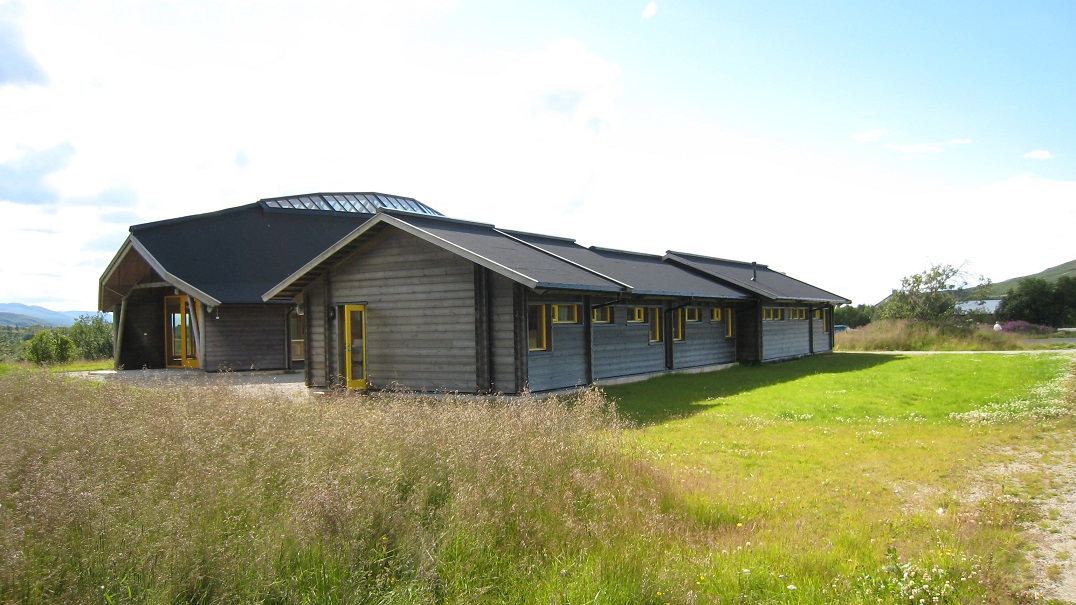
So where can I get log home insurance?
Specialist insurers that we know who explicitly cover log buildings include Adrian Flux and Howden Insurance.
If you’re responsible for actually building your own home, rather than using a main contractor (who should have their own insurance in place) you should also consider self build / site insurance for the duration of the build. There are specialist suppliers, including Protek, Self Build Zone and Self Build.
These can provide peace of mind during your build, and again if you need finance to cover your self build, your lender is likely to need self build insurance in place.
Log homes are still rather niche in the UK, so it makes sense to work with niche companies to understand and recognise this and the benefits of a log home. For you as a log home owner, it all adds to the element of “Being that bit different”.